PLATO space mission
ESA is currently making the final preparations for its new mission, PLATO (PLAnetary Transits and Oscillations of stars). This space telescope was developed to discover rocky planets. Specifically, it is looking for planets within the habitable zone that orbit stars similar to our sun. In essence, PLATO is searching for an Earth 2.0.
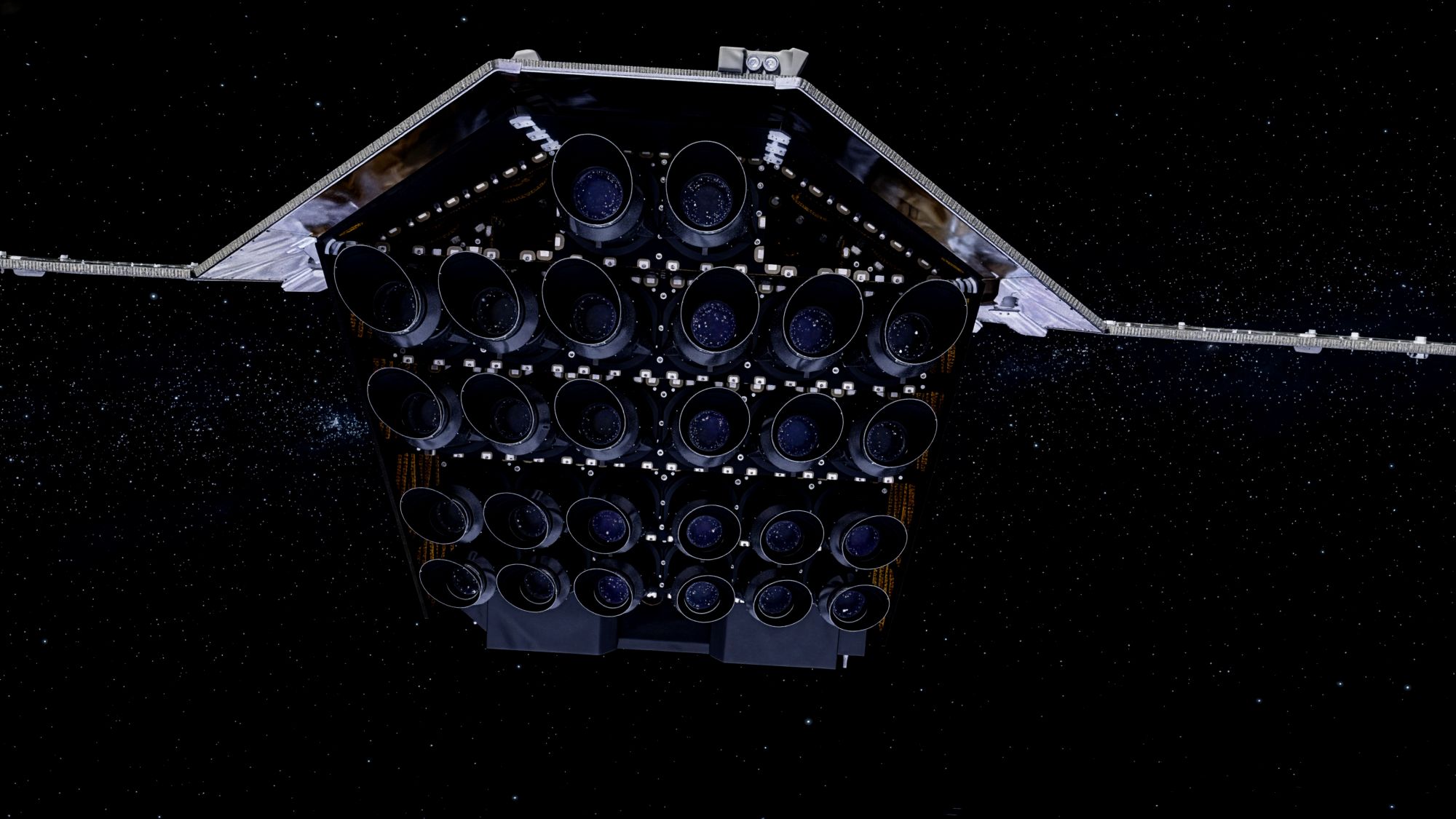
PLATO is named after the famous Greek philosopher Plato, who sought a natural law to explain the uniformity and regularity of the orbits of planets (wandering stars).
The goal
PLATO is part of ESA’s Cosmic Vision program. Missions within this program aim to provide greater insight into:
- How the solar system works.
- The conditions required for planet formation and the emergence of life.
- The fundamental laws of physics of the universe.
- What the universe is made of and how it originated.
PLATO is a multi-telescope observatory featuring 26 cameras. Each of these cameras is a refracting telescope consisting of 6 lenses. This allows PLATO to monitor 150,000 bright stars simultaneously. The goal is to discover the planets associated with a million stars and subsequently investigate their properties.
PLATO detects planets using the transit method: when a planet passes in front of a star, the light dims by a fraction. If that pattern repeats regularly, it indicates a planet orbiting the star in a fixed path.
The second goal of the mission is asteroseismology; PLATO studies the oscillations (vibrations) of stars. This provides information about the internal structure, evolution, and age of the star.
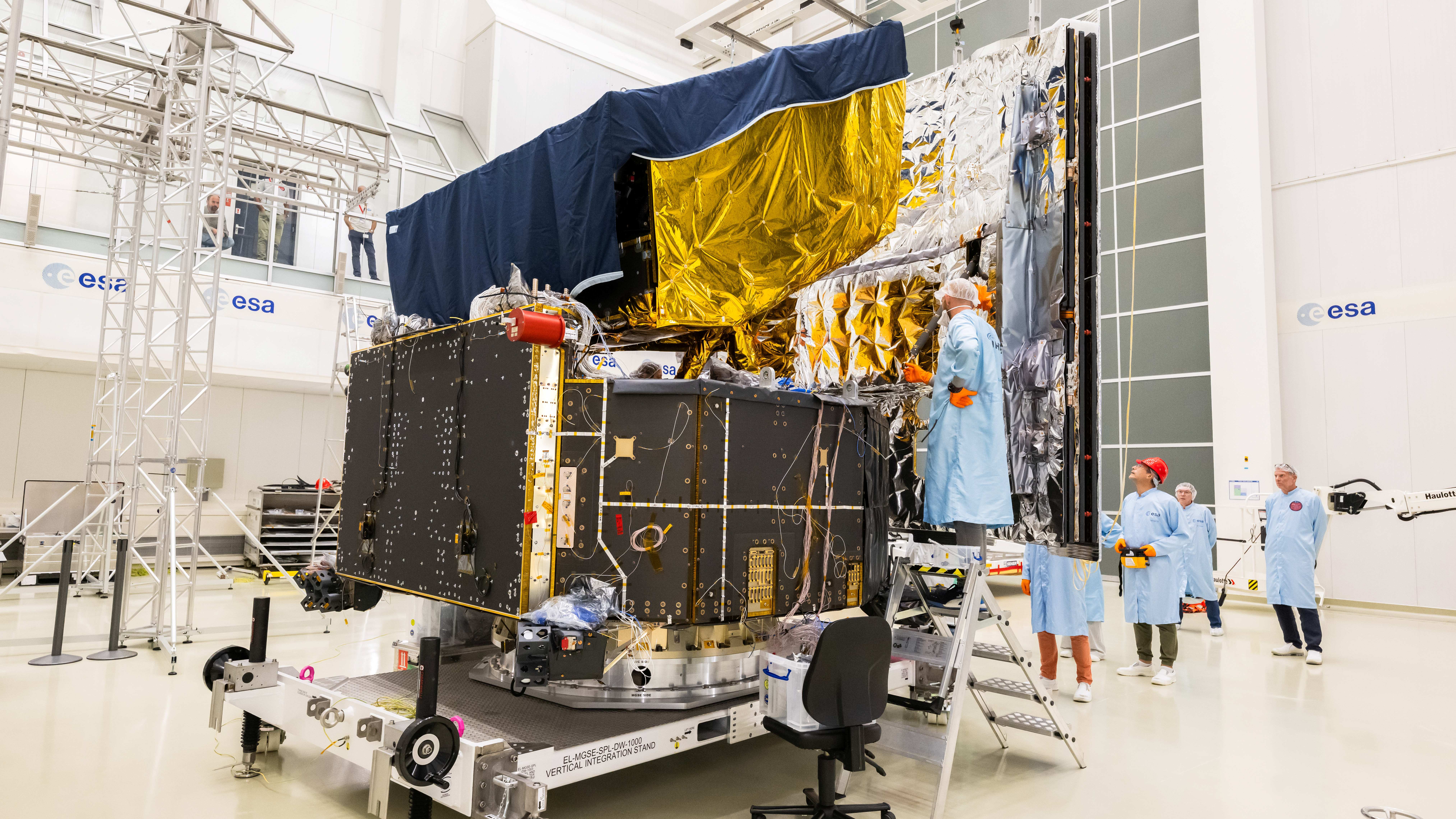
ESA ESTEC
PLATO is currently at ESA ESTEC in Noordwijk, where ESA staff are putting the finishing touches on the mission. For instance, the telescope has been fitted with its sunshield and solar panels - a delicate and challenging task!
The sun is both a friend and a foe to PLATO. The solar panels capture sunlight and convert it into electrical energy, while the sunshield protects the sensitive instruments from heat and excessive light. This is crucial, as the telescope’s cameras operate best at a temperature of -80 degrees Celsius.
Testing, testing and more testing
PLATO is now complete, so the testing can begin! At ESTEC, the deployment of the solar panels is being tested. However, things work a bit differently on Earth than they do in space, so space conditions are being simulated. PLATO has been suspended using a cable system to mimic weightlessness. Once successfully deployed, a special lamp was used to simulate sunlight, allowing ESA to test whether PLATO generates sufficient electricity. The telescope passed the test with flying colors.
The mission is on schedule, with the launch planned for December 2026. Before then, several important tests remain, including simulating the noise, vibrations and shocks of the launch. There will also be a simulation of the vacuum and the extreme temperature fluctuations in space. These tests will take place in Europe’s largest vacuum chamber: the LSS at ESTEC.

in je inbox
Op de hoogte blijven van al het ruimtevaart nieuws?
Blijf op de hoogte van alles wat er speelt bij Space Expo. Ontvang het laatste nieuws, ontdek nieuwe tentoonstellingen en krijg als eerste updates over bijzondere activiteiten en evenementen. Zo haal je nog meer uit je volgende bezoek.

.jpg)

